


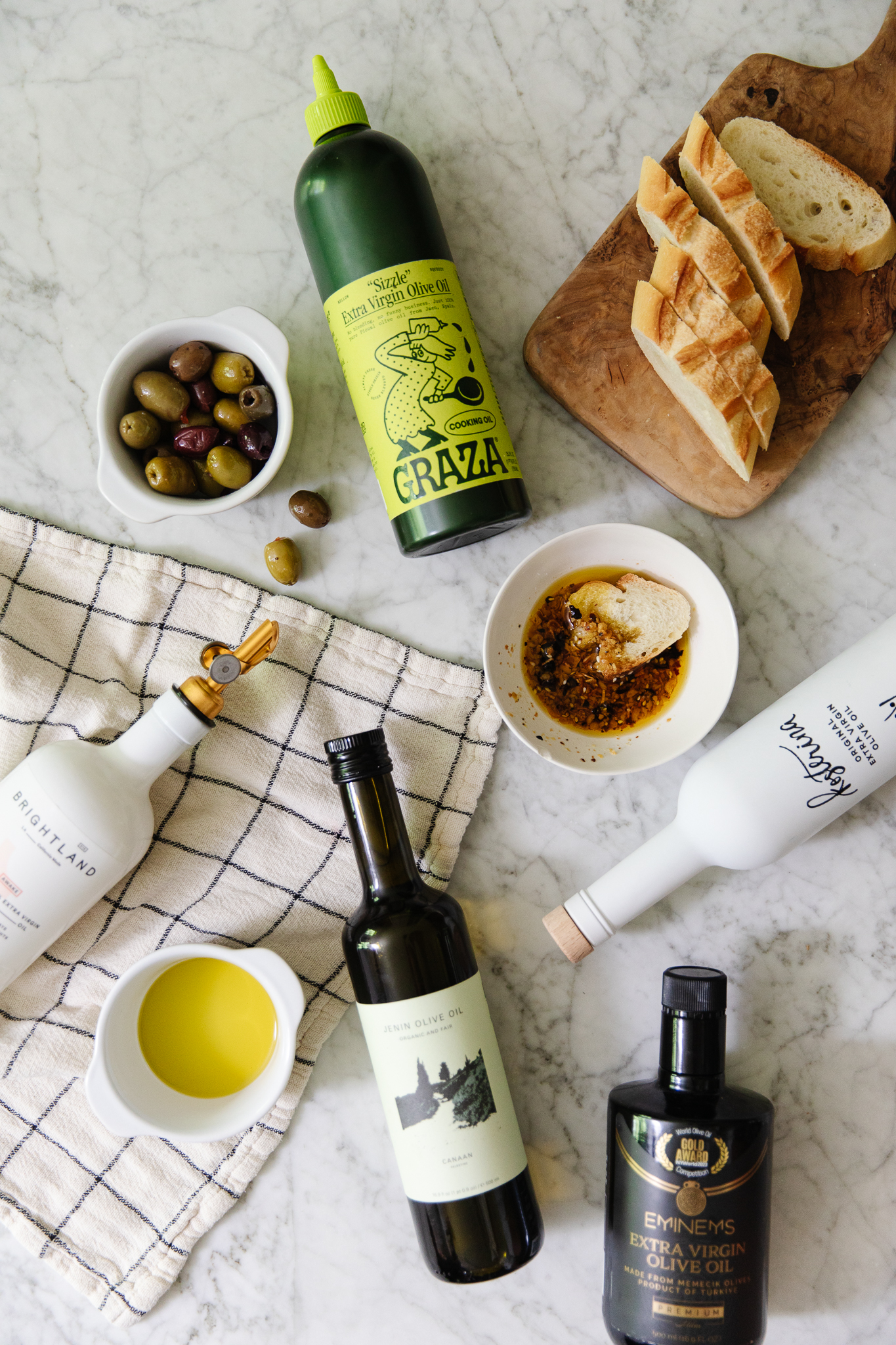
Raise your hand if you keep one bottle of olive oil on hand and you use that one bottle for all of your olive oil needs. That’s how many of us start out, me and Jules included. And while there’s nothing wrong with that, you shouldn’t miss the opportunity to explore the nuances of olive oil (grassy vs. fruity) that can expand the taste profile of your dishes. There’s a lot to navigate, so let’s dive in!

I use extra virgin olive oil in my kitchen, as it’s cold-pressed and therefore closest to the oil that comes straight from the olive fruit. It’s also less acidic than the other types of olive oil (virgin olive oil, refined olive oil or extra-light/light olive oil).
In my opinion, every home cook should have three bottles of extra virgin olive oil: one that’s mild in flavor, one that’s buttery and fruity in flavor, and one that’s a little more sharp and grassy in flavor.
Graza Olive Oil Set
This duo is one of my favorites and a great place to start building an olive oil collection.
shop nowMild olive oil is used for low-heat cooking – no higher than “medium” on the stove I would say, or 375 degrees in the oven (though even that high may give you sticky residue on your pans). The other two bottles should be used as condiments and not cooking (unless it’s a drizzle at the tail end of finishing something over heat).
Grassy vs. Fruity Olive Oils

You can think of the relationship between fruity olive oil and grassy olive oil as similar to a tomato-based barbecue sauce vs. a mustard-based barbecue sauce. While they’re both in the same category, you would choose one over the other depending on the flavor you’re going for. So if you’re creating a dip for bread, think about the other elements before you choose your olive oil. If you’re offering just the oil with some sourdough, a grassy, peppery oil is nice because it really brings the flavor. If you’re adding vinegar, some chile flakes, or fried garlic, choosing a more fruity, buttery olive oil is fun to try because it gives a stable base for the other flavors to shine, while adding a subtle “liveliness” to each bite.
Brightland Duo Olive Oil
Another consistent favorite – their “Awake” blend has a great fruity profile.
shop now
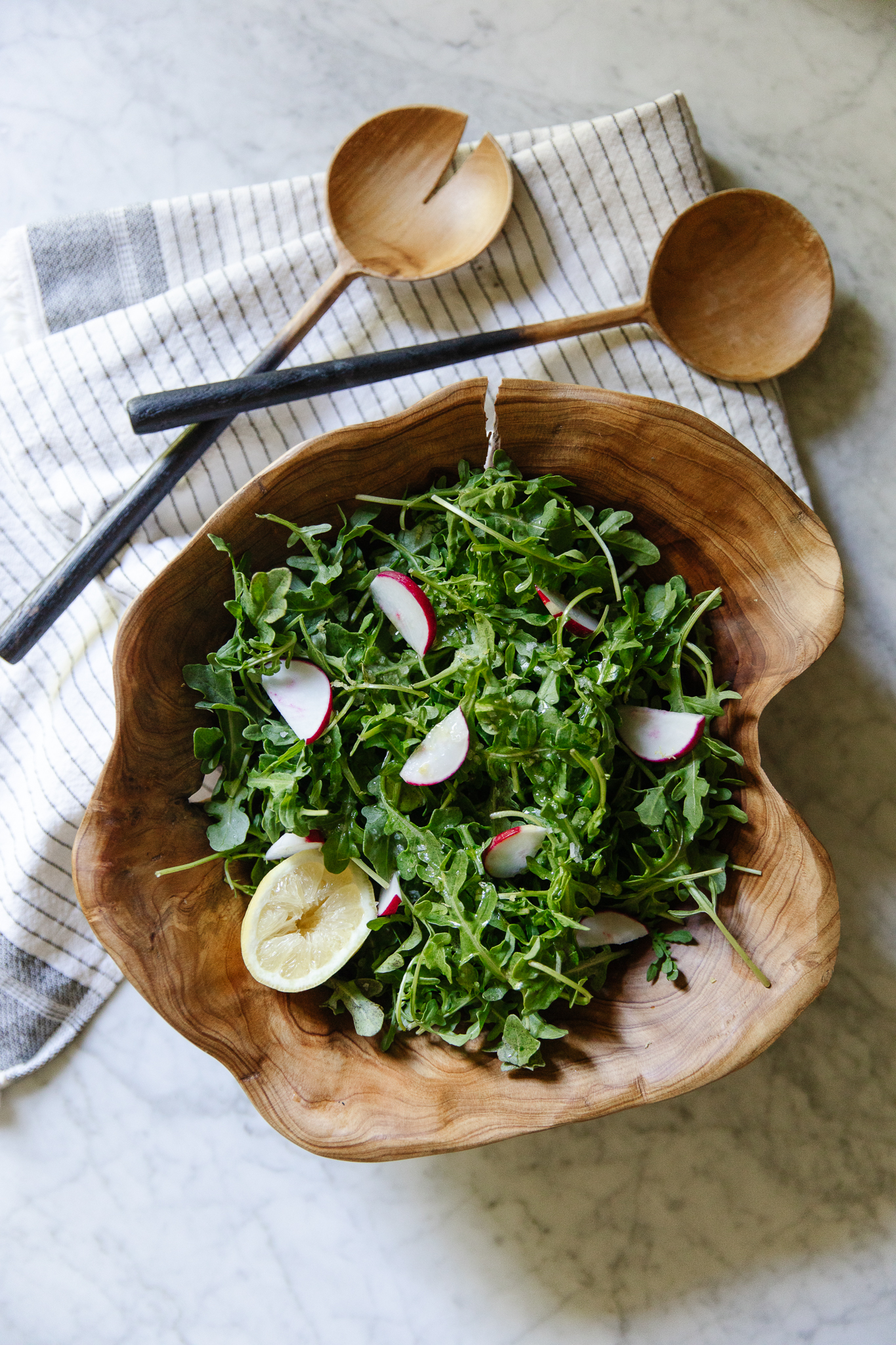
The same approach applies when using olive oil as a dressing. For salads with more neutral-flavored or sweet greens like romaine or spinach, a peppery olive oil is perfect. Whereas with bitter or peppery greens like arugula or radicchio, I prefer to reach for the fruity olive oils to balance out the flavors.
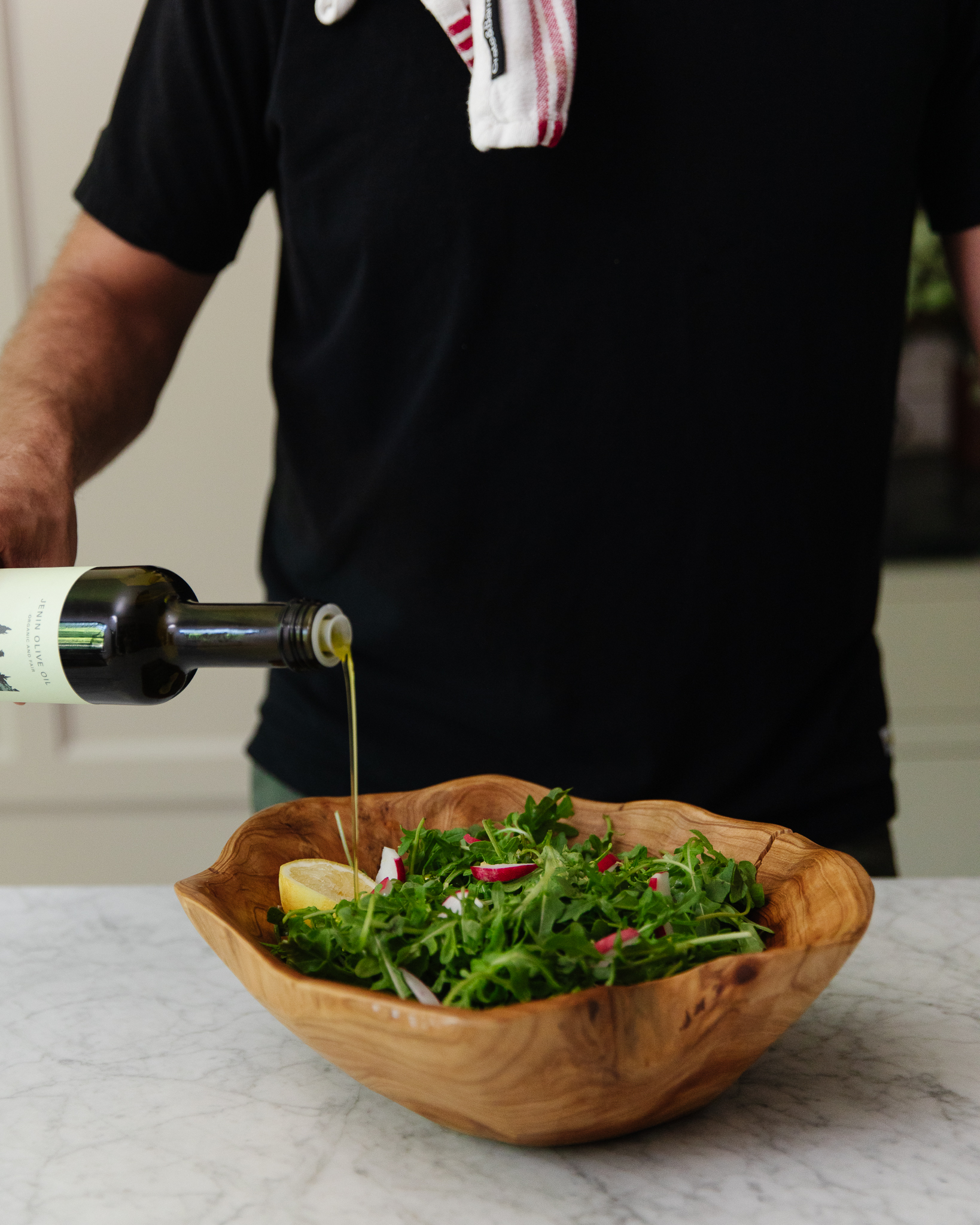
Now there have been times I’ve made the decision to really punch up the flavor, so I’ll use a peppery olive oil with arugula and chiles, plus salt and vinegar, and it’s delicious. There’s not a wrong way to use an olive oil for finishing a dish, because what you choose will depend on what you’re in the mood for.
Choosing an Olive Oil
So the question is, how do you know by looking at the bottle which ones are grassy vs. fruity?
Unfortunately, there’s not a standard way this is reported, so it can be tricky. The olives used, the region where they’re grown, and the harvesting and bottling practices will all have an impact on the flavor of the olive oil.
A good rule of thumb is that if you see “Early Harvest” on the label, it’s likely to have a little bit of a bite to it. Sometimes producers will also use “grassy,” but I think most growers are moving away from that term because people may not associate it with a welcome flavor. Other words you could see for a grassy olive oil may be “spicy” or “bold” or “strong” — any of the more robust descriptors. On the other side of the spectrum, you’ll see words like “fruity,” “buttery,” or “smooth,” which will indicate the more delicate type of olive oil that is typically made from riper olives. Note that labeling can also be subjective, and it’s worth tasting to decide: For instance, between Brightland’s Awake and Alive olive oils, Awake is more fruity even though they use the words “bold” and “robust” to describe it, and I think Alive is more peppery even though they describe it as “smooth.”
Check out my favorite picks for each type of olive oil below, and let me know about any you’ve fallen for over the years.
Mild Olive Oil: Graza “Sizzle” Extra Virgin Olive Oil
Peppery Olive Oil: Graza “Drizzle” Extra Virgin Olive Oil, Eminems Extra Virgin Olive Oil, Kosterina Original Extra Virgin Olive Oil, Brightland Alive Extra Virgin Olive Oil,
Fruity Olive Oil: Canaan Jenin Olive Oil, Brightland Awake Extra Virgin Olive Oil






What kind of olive oil would you recommend for olive oil cake? Thank you!
For olive oil cake, try something with the descriptors of buttery, smooth or fruity.
Thanks to you, I just remembered. I’m going to the McEvoy outlet today to purchase some organic olive oil. I reside in Petaluma where the ranch is located and the newly opened downtown outlet store. Visit McEvoyRanch.com for more info.
PS. they offer tours of the amazingly gorgeous ranch if &/or when you are in this next of the woods!!
Hi – might you recommend any peppery organic olive oils? Thank-you for the write-up – I’ve often wondered how to purchase that amazing peppery flavor after a meal at a local restaurant. Although I queried, the waitress would not divulge info?!?!
For “organic” I actually prefer Brightland. Their small family farm partners use sustainable practices but don’t have certification yet, as they’re a newer company and certification is expensive. But that’s a personal decision.
That works for me! THANK YOU!!
Thanks for sharing, Chris! I’ve always been confused about all the different options, so it’s super helpful to have this outlined. Would you consider a similar post for different types of salt?
But doesn’t olive oil go bad fairly quickly? Do you use all three enough to not waste it?
I use them enough, but a good rule of thumb is to keep them out of direct light (dark green glass or a solid label that doesn’t let light through).
Can you tell the taste in the olive oils. We use the store bought oil and I have always wondered if they tasted any different.