


We recently received this email from a reader:
Hello,

Our previous Dining Room/Kitchen
I thought, “Have we really never posted about mixing wood tones?!” And then I remembered my sister asking a similar question to Nisha’s when she moved into her very modern Seattle apartment: “All of the wood is blonde,” she said. “Do I really have to stick to this?”
No! You can and should mix wood tones. My advice? Keep your pine furniture and your cedar chest. With a few easy “rules,” you can have it all.

Let me start by saying — Using the same wood tone in a space can make everything look flat. Instead, go for a layered, lived-in look, with wood tones that both compliment and contrast. As you decorate your home over time, you pick up pieces along the way. These pieces won’t match — and that’s the best part.

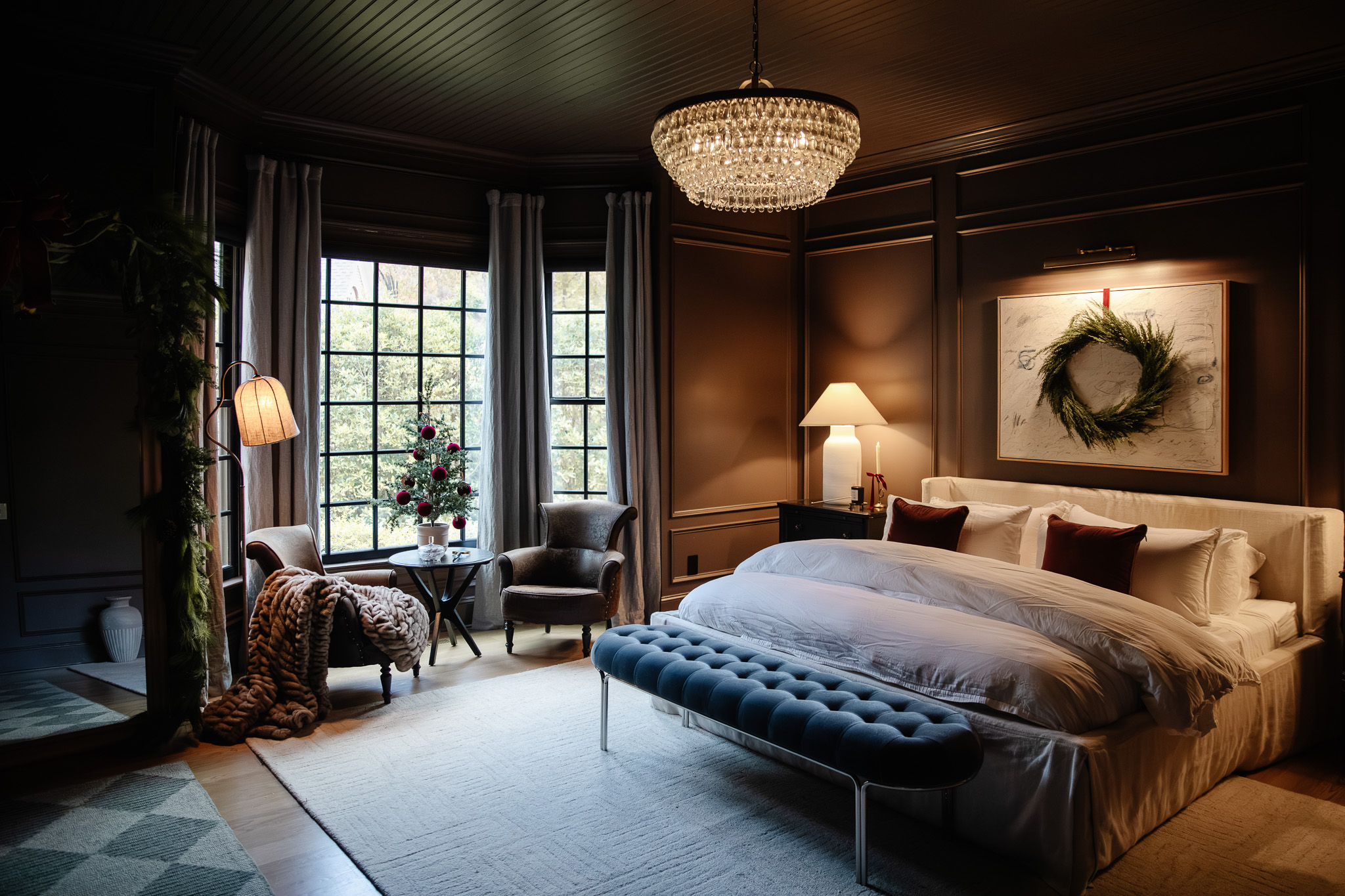
First, find your dominant wood tone. This could be the floors or the largest piece of wood furniture or a wall of cabinets (especially if a rug is covering much of the hardwood floors). Next, introduce some contrast. Contrast is okay! It’s kind of what you’re going for. Mixing a light wood with a dark wood will look intentional. For an easy formula: Choose a light, medium, and dark tone.
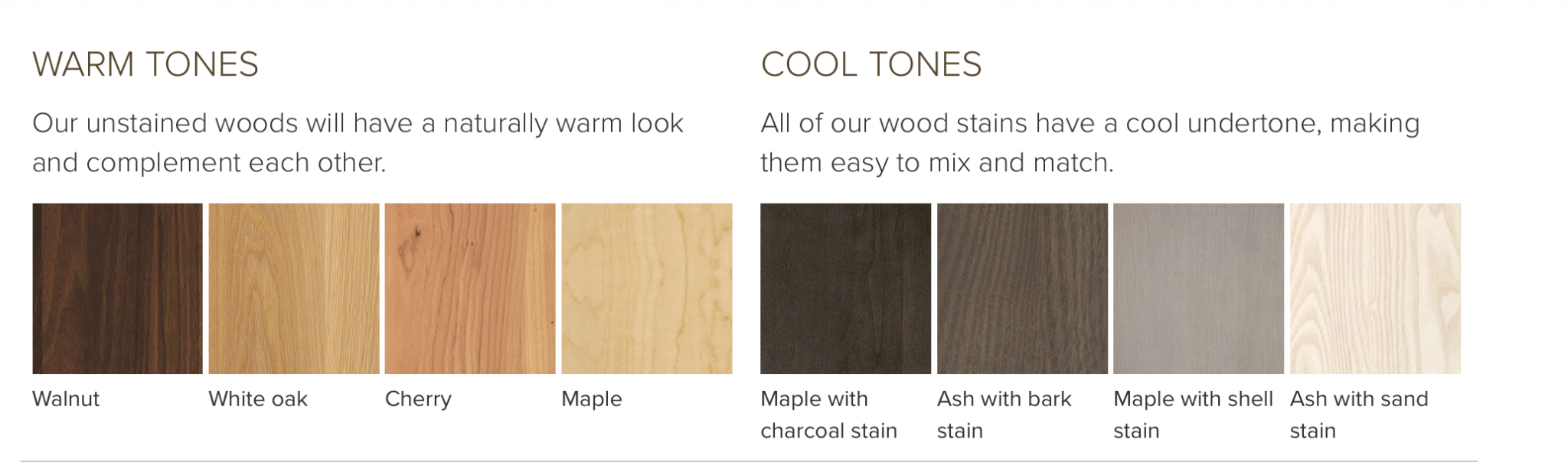
Next, match the undertones. Most wood is warm. But take note at the chart below! Walnut is versatile because it’s so neutral, in which case the undertone could swing either way depending on the stain and the woods you pair it with. If your dominate wood tone is warm, stick with warm woods. If your big piece is cool in tone — embrace it, and look for other pieces with blue/gray undertones. There’s no need to carry a wood swatch around. Just ask yourself, “Is this piece warm or cool?”
I love this little cheat sheet from Room & Board:
You can get away with using all light wood tones, if that’s your thing. This has a beautiful and peaceful effect. But you’re going to have a harder time making sure your wood tones don’t clash when the difference between your values is small. (Remember: The value is how light or dark something is; Tone is how warm or cool it is.)

Part of what makes a room feel cohesive is repetition. When mixing wood tones, each tone needs to be represented at least twice in the room. When pairing wood tones, you could choose a piece as small as a bowl or a frame. Balance the wood tones around the room. Just like you would in a gallery wall, avoid “clustering” all of the wood tones in one area. And speaking of gallery walls, this is a great place to tie in a wood tone that needs duplication. If a chair or an end table is the only piece in its tone, look for a frame in the same tone.

A really visible grain is your friend. Large wood grains make a space feel rustic and casual, while small wood grains make the room feel formal and polished. Feel free to sprinkle in a little bit of both (the way you would pair pieces that are modern with those that are traditional), or read the room. Maybe the large wood grain is the casual vibe you’re going for. And here’s a cheat: If you’re struggling to tie the wood tones together, try for similar grains in the woods.
The rug doesn’t have to match the wood tones. In fact, if you can introduce contrast here — a cool rug under warm woods — it might help pull your undertones into focus, showing how all of your wood pieces “go together.”

The warmth of wood is making a big comeback so there are more wood tones, cabinets, and accessories to choose from now than ever before. If you ever feel like things have gotten “out of hand” — too many wood tones, too many finishes — pull back. Swap out a piece or two. Try sanding a few different wood pieces down and applying the same stain. Introduce some contrast (I love pairing black –even stained black!). Look to that dominant wood tone, and start over if you have to. You got this.



Stumbled on this article after having an existential crisis about wood furniture. Thanks for walking me back from the ledge. My fiancé and I are started to look at upgrading our furniture we got in college and this article was a huge help in explaining how to mix wood colors. Thank you!
This is so helpful as I move into a new home after collecting various pieces over the years that have importance to me.
Now I feel confident in keeping older wood pieces with my new maple floors. Thank You!
I love your designed rooms in this post, “how to mix wood tones like a pro.” They are all beautiful and I’m so very happy to see traditional pieces/looks coming back in vogue! BRAVO, Chris Loves Julia!! I’m excited to receive your emails with more beautiful suggestions and photographs.
Can I match light cool wooden pine with some tu he’s redwood furniture ?
Loved, loved, loved this article